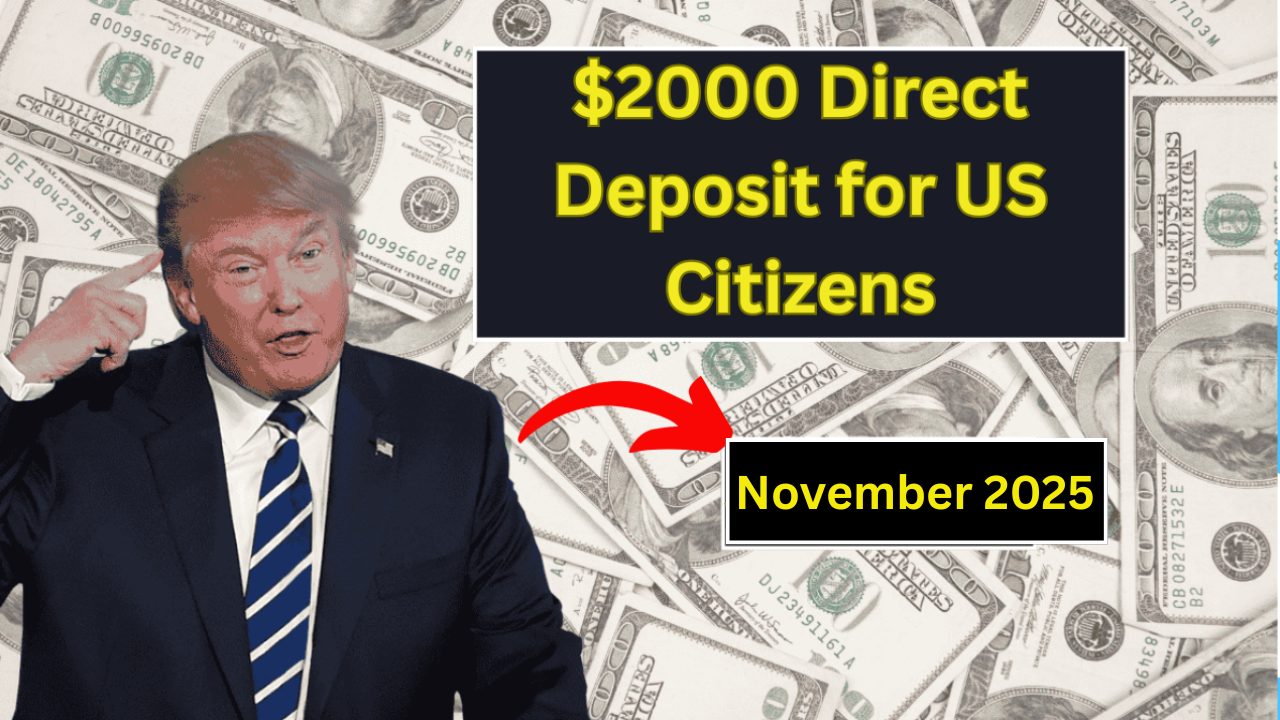
Good News:Reports about a $2,000 direct deposit for U.S. citizens in November 2025 have raised hopes—but also confusion. Here’s what’s true, what’s not, and what you should know.
What’s going on?
In recent days, posts on social media and some websites have claimed that the Internal Revenue Service (IRS) will automatically send $2,000 in special relief payments to eligible U.S. residents in November 2025. Some link this to the “tariff dividend” proposed under Donald Trump, which would distribute surplus tariff revenue to Americans.
But—and importantly—the IRS hasn’t approved any new $2,000 direct-deposit payments this month, and Congress hasn’t passed any legislation to make such payments possible.
This means that while the idea of a $2,000 payment is being widely discussed, it’s still unofficial and speculative.
Important Points: Eligibility, Payment Dates, and IRS Instructions
Here’s a breakdown of the situation as of the end of November 2025:
Eligibility
- The IRS has not announced an official payment program that would provide $2,000 to all U.S. citizens in November.
- Rumors often mention a broader “citizen” eligibility, but without legislation or IRS rulemaking, no formal eligibility criteria exist yet.
- Some speculation links this payment to low- or moderate-income taxpayers, but no official definition or requirements have been released.
Payment Dates
- Because there is no authorized payment schedule, there is no confirmed payment date.
- Reports suggest “November 2025” as a timeframe, but this is based on estimates rather than a confirmed IRS or Treasury announcement.
IRS Instructions and What to Do
- The IRS emphasizes: Do not act on unsolicited messages promising a $2,000 deposit or asking you to “claim” or “unlock” a payment by providing banking or personal information. These may be scams.
- To be prepared, make sure you have filed your most recent tax return (if required), your direct-deposit banking information is up-to-date with the IRS, and your mailing address is current.
- For accurate information, always check the official IRS website (IRS.gov) or United States Department of the Treasury announcements.
Why The Rumors?
- The idea of a $2,000 payment likely stems from Donald Trump’s comments suggesting a “tariff dividend” of at least $2,000 to each individual, funded by U.S. tariffs.
- Several stories circulating online mention this idea and describe it as “coming soon,” although no proposal has yet become federal law.
- In today’s rapidly changing internet environment, speculative or click-bait headlines spread quickly—which means false or misleading claims can proliferate.
What this means for you
- If you’re a U.S. citizen or resident expecting a $2,000 deposit this month: Don’t trust it until you receive an official statement from the IRS or Treasury.
- Treat any message, email, or social media post claiming you need to “register” or provide bank details to receive a payment with extreme suspicion. Genuine federal payments don’t require unsolicited registration.
- Be vigilant: Check IRS.gov for updates, and if you spot anything suspicious, you can report it to the IRS or the Federal Trade Commission (FTC).
- Maintain good tax filing and direct deposit information — staying up-to-date means fewer problems if a payment program is launched.
Requently Asked Questions (FAQs)
Q1: Is the IRS definitely sending $2,000 to U.S. citizens in November 2025?
Ans: No — as of now, the IRS has not authorised such a payment and no legislation has been passed to require it.
Q 2: What is the so-called “tariff dividend”?
Ans: It refers to a proposal by Donald Trump to distribute part of U.S. tariff revenue to individuals, suggesting $2,000 or more per person. However, this remains a proposal — not government policy or law.
Q 3: Am I required to apply or register to receive the payment?
Ans: Not at this time — because no authorised payment plan exists. If a legitimate payment program were announced, the IRS would provide official guidance on what steps (if any) are needed.
Q 4: Could this payment still be authorised later this year or early next year?
Ans: It is possible that Congress could act, but there is currently no official timetable. Until legislation is passed and the Treasury/IRS issues guidance, the payment remains speculative.
Q 5: What should I do now while waiting?
Ans:
- Ensure your tax filings are up to date.
- Verify your direct deposit and mailing address information with the IRS (if you have an IRS online account).
- Keep an eye on official IRS announcements for any new relief payments.
- Ignore and report any messages demanding personal data or promising “automatic payments” without official disclosure.